Definition and traceability
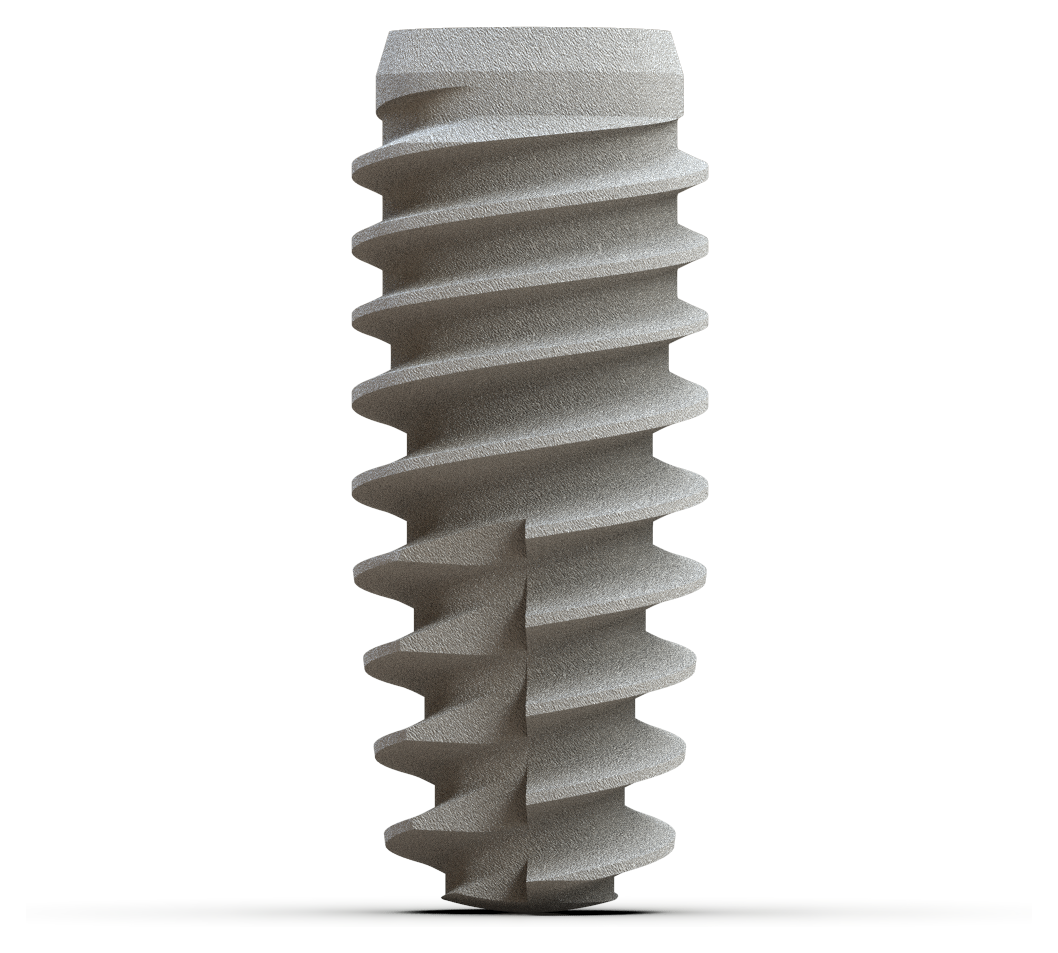
The NucleOSS Dental Implant System is an in-bone dental implant system with implants and related abutments, healing caps and surgical instruments. T6 and T6 Torq implants are compatible with T6 Superstructures and the T6 Surgical Set. The product label gives the product code, specification, date of manufacture and expiry date.
Each implant package has a lot number on it and contains three lot number labels. These labels must be attached to the patient’s file and panoramic X-ray for retrospective traceability of the product.
Intended use and indications
Intended use: T6 and T6 Torq dental implants are surgically implanted into the lower or upper jaw bone and used to support artificial dentures that restore the patient’s chewing function.
Indications: functional oral rehabilitation of the upper or lower jaw of fully or partially edentulous patients. They can be used for immediate or late implantation after loss or extraction of natural teeth.
- T6 implants are designed for delayed loading after 12 weeks.
- T6 Torq implants can be placed immediately for single tooth and/or multiple tooth restorations when good primary stability is achieved and with appropriate occlusal loading for restoration of masticatory function.
Target patient population: people with adult jaw structure where none of the contraindications for dental implantation apply. Target users: dentists licensed in dentistry.
Contraindications
- High blood pressure, cardiovascular disease, diabetes, bone metabolism disorders, uncontrolled bleeding disorders, inadequate wound healing capacity, inadequate oral hygiene, serious internal medical problems, incomplete development of the upper and lower jaw, poor general health, uncooperative and unmotivated patients, drug, alcohol or smoking addiction, psychoses, functional disorders resistant to long-term treatment, xerostomia (dry mouth), granulocytopenia (lack of white blood cells), Ehlers Danlos syndrome, radiation therapy, osteoradionecrosis, weakened immune system, renal failure, organ transplantation, fibrous dysplasia, crohn’s disease, steroid, corticosteroid or anticonvulsant use, prophylactic antibiotics, creatinine, serum calcium, titanium allergy, uncontrolled endocrine disorders, anticoagulation drugs, haemorrhagic diathesis, bruxism, parafunctional habits, unfavourable anatomical bone conditions, uncontrolled periodontitis, temporo-mandibular joint disorders, treatable pathological diseases of the mandible or changes in the oral mucosa, pregnancy, breastfeeding, osteoporotic fracture, respiratory disease, thyroid or parathyroid diseases.
- Patients with active osteolytic, inflammation, diagnosed malignancy, nodular growths, tenderness, unexplained swelling of the head or neck, infectious conditions at the implant site.
- Unrealistic patient expectations.
- Unattainable prosthetic reconstructions.
- Inadequate training of the practitioner.
Warnings and precautions
Observance of precautions and warnings ensures safe handling and application.
- Use of the NucleOSS brand and sale of NucleOSS Dental Implant System products are restricted to NucleOSS and its business partners.
- All models in the NucleOSS Dental Implant system (T6 and T6 Torq) should be applied according to NucleOSS Surgical and Prosthetic protocols.
- It should be kept out of the reach of children.
- Implants of different sizes are used according to the diameter and length suitable for the application area; use an abutment compatible with the implant.
- Inform the patient before and after the surgical operation.
- Do not open the tube cap in any way until the moment of use. Never use uncapped or deformed tubes.
- The patient’s health condition must be suitable for the operation.
- Use drills suitable for the diameter and length of the implant.
- The implant tube must be removed from the blister with gloves on a sterile cloth. Implants with a broken protection ring or damaged packaging should not be used.
- Against the risk of contamination, the implant should be placed in the opened slot as soon as it is removed from the sterile tube, without touching it.
- Implants are in sterile packaging. Do not sterilise a second time.
- Previously used implants cannot be reused.
- NucleOSS Dental Implants do not require training and device installation before use. If you need training in use, you can get help from the NucleOSS website (https://www.nucleoss.com/) or contact the relevant dealer or NucleOSS.
Points to consider
- Implants should not be placed in bones other than the maxilla or mandible.
- Always select the implant with the largest diameter that can be supported by the available bone thickness, bone quality, interdental space and expected masticatory forces. Special care should be taken to ensure proper implant alignment when relatively high loads are expected.
- During placement, the dentist and auxiliary personnel must use appropriate personal protective equipment (PPE) to prevent the risk of interpersonal infection. The procedure should not be performed without gloves and masks.
Before surgery: a clinical and radiological examination of the patient should be performed preoperatively to determine the patient’s suitability for treatment and to determine the patient’s psychological and physical condition.
Special attention should be paid to patients with localised or systemic factors that may interfere with the bone or soft tissue healing process or the osseointegration process (for example smoking, poor oral hygiene, uncontrolled diabetes, facial radiotherapy, infections in the lateral tooth or bone, bisphosphonate therapy).
The device has not been evaluated in paediatric/adolescent patients and is not recommended for use in children.
Surgery: all components, devices and instruments used during the procedure should be kept in good condition, and care should be taken to ensure that the instrumentation does not damage the implants or other components. Following implant placement, the surgeon assesses bone quality and primary stability and determines when the implants can be loaded.
After surgery: to ensure a long-term treatment outcome, it is advisable to ensure regular comprehensive patient follow-up after implant treatment and to provide the necessary information about proper oral hygiene.
Residual risks and side effects
The clinical outcome of dental treatment can be influenced by many variables. Possible residual risks and side effects may occur during or after the operation:
- Pain, swelling, phonetic difficulties, gingivitis.
- Dental implants, permanent paresthesia, dysesthesia, marginal bone loss, localised or systemic infections, oroantral or oronasal fistula, disruption of adjacent teeth, irreversible damage to adjacent teeth, implant fractures in the jaw, bone or prosthesis, nerve damage, exfoliation, chronic pain associated with hyperplasia, implant failure, fractures in the neck area where the implant and abutment meet, screw loosening or fracture, abutment fracture, abutment compression into the implant.
Materials and surface
NucleOSS dental implants are manufactured from pure Grade 4 titanium according to the ISO 5832-2 standard. Chemical composition:
| N | C | H | O | Fe | Ti |
|---|---|---|---|---|---|
| 0.05 | 0.08 | 0.0125 | 0.4 | 0.5 | Balance |
T6 and T6 Torq implants have an SLA surface. Sandblasted pure titanium is surface treated with thermal acid. The body becomes hydrophilic after surface treatment.
Compatibility and Basic UDI-DI
T6 and T6 Torq implants are compatible with T6 Superstructures and the T6 Surgical Set. Basic UDI-DI codes:
| Reference | Description |
|---|---|
| 869938335T67A | Basic UDI-DI — T6 dental implants |
| 869938335TRQ43 | Basic UDI-DI — T6 Torq dental implants |
Procedure
Implants come with a tube label, tyvek label and box label, which allow the lot number to be checked in three stages. The diameter label shows the diameter and length of the implant and is colour coded for different diameters.
| Product group | Colour | Diameter |
|---|---|---|
| T6 implant | Yellow | Ø 3.5 |
| T6 implant | Green | Ø 4.1 |
| T6 implant | Purple | Ø 4.8 |
| T6 Torq implant | Yellow | Ø 3.5 |
| T6 Torq implant | Brown | Ø 4.0 |
| T6 Torq implant | Blue | Ø 4.5 |
| T6 Torq implant | Green | Ø 5.0 |
| T6 Torq implant | Purple | Ø 6.0 |
T6 covers are provided with T6 and T6 Torq implants and are colour coded by the implant diameter they are used with. Cover colours by implant diameter:
| Colour | T6 | T6 Torq |
|---|---|---|
| Yellow | Ø 3.5 | Ø 3.5 |
| Brown | — | Ø 4.0 |
| Blue | — | Ø 4.5 |
| Green | Ø 4.1 | Ø 5.0 |
| Purple | Ø 4.8 | Ø 6.0 |
The implant diameter, implant type, position and number of implants should be selected individually, taking into account patient anatomy and spatial conditions. The measurements given should be considered as minimum guidelines and are detailed in the NucleOSS Surgical Manual (https://www.nucleoss.com/kaynaklar/download/).
Implant bed preparation: heat damage inhibits healing of the dental implant. Excessive increases in temperature should be minimised by following the guidelines for the use of the NucleOSS Dental Implant System drills and instruments regarding drilling speeds, intermittent drilling and adequate cooling.
Implant placement: a NucleOSS implant is moved from the sterile tube to the surgical site with the implant transport-clamping part, using a ratchet, motor or screwdriver. When moving the implant cap from the sterile tube to the surgical site, the hex key is fully inserted into the implant cap and retracted in the same axis without turning it left or right.
When placing a T6 or T6 Torq implant with a micromotor at a maximum speed of 15 rpm, or with a manual hex key, it is placed by turning clockwise so that the upper surface of the implant is 0.7 mm below the bone level.
Soft tissue treatment and wound closure: before the wound is closed, the cap that comes out of the implant tube, coloured according to the platform diameters, is placed on the implant with a hex key and closed by hand tightening. If it is not closed, tissue enters the implant and creates a risk factor.
Cleaning, disinfection and sterilisation
Implants are delivered sterile and are disposable. They should not be cleaned or disinfected. The manufacturer does not accept any responsibility for the processing of devices initially delivered as sterile, regardless of who performs the procedure or by which method.
Implants are delivered sterile and for single use only. They must not be sterilised. Implants and caps are sterilised by gamma radiation (sterility guaranteed for five years). Implants are wash-processed in a Class 10,000 environment and sealed in a Class 100 clean room environment. The double sterile barrier system and packaging protect the sterilised device from external factors and ensure sterility until the expiry date if the device is stored correctly.
Asepsis rules must be followed when removing the device from the protective packaging and sterile barrier system. The sterile barrier system should not be opened until just before implant placement.
Before opening the sterile packaging, check it for damage. Devices with damaged packaging should not be used. It is recommended to have a spare on hand. Re-sterilisation not performed by the manufacturer does not guarantee that the device is sterile, and the manufacturer does not accept any responsibility for re-sterilised devices that were originally delivered as sterile, regardless of who performed the re-sterilisation or by which method. Under no circumstances should a previously used or unsterilised implant be used.
For abutment sterilisation information, refer to the abutment user manual.
MR safety information
Non-clinical testing has demonstrated that the NucleOSS Dental Implant System is “Conditional MR”. The patient can be safely scanned with this device immediately after placement under the following conditions:
- In the magnetic static field of 1.5-Tesla and 3-Tesla.
- 4,000-gauss/cm (40 T/m) dimensional gradient magnetic field.
- Maximum reported MR system average specific absorption rate (SAR) for the body 2 W/kg (Normal Operating Mode).
Under these scan conditions the system is expected to produce a maximum temperature rise of less than 1.7 °C after 15 minutes of continuous scanning. In non-clinical testing, when imaged with an artifact gradient echo pulse train and a 3.0 T MRI system, the image extends approximately 5 mm from the implant.
Storage and disposal
- Store at 18 °C to 28 °C and 40% to 60% humidity.
- Store in the original packaging in a dry place, protected from direct sunlight.
- Improper storage may jeopardise the basic material and design properties and may cause the device to malfunction.
Disposal must comply with local regulations and environmental requirements, taking into account the different levels of contamination. Hazardous waste from contaminated devices or sharps must be disposed of in appropriate containers that fulfil certain technical requirements.
Patient information, clinical benefit and implant card
- The patient should be informed about contraindications, warnings, precautions, side effects and complications.
- There is no residue, leakage or harmful residue on the surface of the device that could harm the user or the patient.
- The patient should be informed about the MRI compatibility of the products used.
- The surgical site should be kept clean before and after the operation, and the patient should be well informed about its cleanliness.
- The implanted area should not be exposed to load with chewing movement in the early period.
- For detailed information, refer to the Patient Information Booklet (https://www.nucleoss.com/hastaya-ozel/).
Expected clinical benefit: patients can expect to have one or more missing teeth replaced and/or crowns restored to restore chewing function.
Implant card: the manufacturer provides an implant card for each implant. The dentist fills it in and delivers it to the patient. It records all information about the implant and is useful for monitoring the device over time. If necessary, the patient can show the implant card to any dentist, who can act appropriately to resolve any problems and contact the manufacturer if necessary. The dentist should advise the patient to take good care of the card and bring it to every subsequent check-up.
Reporting serious adverse events and safety summary
A summary of safety and clinical performance for T6 and T6 Torq implants will be available with the launch of the European Database for Medical Devices at https://ec.europa.eu/tools/eudamed.
In countries with Regulation 2017/745/EU on Medical Devices: if a serious adverse event occurs during or as a result of the use of this device, notify the manufacturer and your national competent authority. Manufacturer contact for reporting: NucleOSS, e-mail info@nucleoss.com. See the full instructions (PDF) for the web address.
Symbols
These symbols are used on NucleOSS products. See the full instructions (PDF) for the symbol graphics.
- Product catalogue number
- Authorised representative
- Product lot number
- Read the operating instructions
- 2nd time not used
- Expiry date
- Sterilisation with gamma irradiation
- Do not use if the packaging is damaged
- Temperature range
- Manufacturer
- Prescription use only
- MRI safety information
- Humidity range
- Warnings
- Do not sterilise again
- Double sterile barrier system
- Medical device
- Producer country
- Unique device identifier
- Model number
- Importer
- Distributor
- CE marking: the manufacturer’s declaration that the product meets the requirements of the applicable EC legislation; where applicable, the identification number of the Notified Body follows the symbol