Definition and scope
NucleOSS T6 and T6 Torq abutments are prefabricated prosthetic components directly connected to endoosseous dental implants and are intended to be used as an aid in prosthetic rehabilitation.
The NucleOSS Dental Implant System is an in-bone dental implant system with dental implants and related abutments, healing caps and surgical instruments. It is compatible with T6 and T6 Torq abutments, T6 and T6 Torq dental implants and the T6 Surgical Set. Failure situations that may occur as a result of use with different systems may harm the patient. The product label gives the product code, specification and production date.
The system offers dentists a wide range of abutment options for different purposes with all bodies, including cemented, screwed, customised, removable prosthesis, CAD-CAM solutions and scan bodies, as well as auxiliary prosthetic parts and temporary parts.
- 1.1 Abutments: placed on dental implants to provide support for prosthetic reconstructions such as crowns or bridges. See the catalogue for abutments compatible with the platform diameter and length of the abutments.
- 1.2 Screws: the screw is used to fix the abutment to the dental implant.
- 1.3 General information: most of their abutments are suitable for use throughout the patient’s lifetime.
Intended use and target population
Intended use: NucleOSS abutment and prosthesis parts are parts used to support crowns, bridges or superstructures in the lower and/or upper jaw, used with the NucleOSS Dental Implant in completely edentulous or partially edentulous patients.
Target patient population: people with adult jaw structure where none of the contraindications for dental implantation apply. Target users: dentists licensed in dentistry.
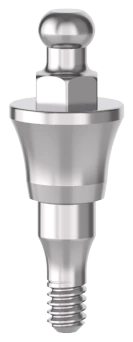
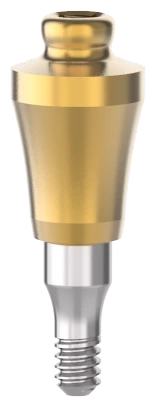
Removable abutments are abutments that enable the dentures to be fixed in the patient’s mouth and removed when desired. NucleOSS movable abutments are Ball and Equator abutments.
Contraindications
- High blood pressure, cardiovascular disease, diabetes, bone metabolism disorders, uncontrolled bleeding disorders, inadequate wound healing capacity, inadequate oral hygiene, serious internal medical problems, incomplete development of the upper and lower jaw, poor general health, uncooperative and unmotivated patients, drug, alcohol or smoking addiction, psychoses, functional disorders resistant to long-term treatment, xerostomia (dry mouth), granulocytopenia (lack of white blood cells), Ehlers Danlos syndrome, radiation therapy, osteoradionecrosis, weakened immune system, renal failure, organ transplantation, fibrous dysplasia, crohn’s disease, steroid, corticosteroid or anticonvulsant use, prophylactic antibiotics, creatinine, serum calcium, titanium allergy, uncontrolled endocrine disorders, anticoagulation drugs, haemorrhagic diathesis, bruxism, parafunctional habits, unfavourable anatomical bone conditions, uncontrolled periodontitis, temporo-mandibular joint disorders, treatable pathological diseases of the mandible or changes in the oral mucosa, pregnancy, breastfeeding, osteoporotic fracture, respiratory disease, thyroid or parathyroid diseases.
- Patients with active osteolytic, inflammation, diagnosed malignancy, nodular growths, tenderness, unexplained swelling of the head or neck, infectious conditions at the implant site.
- Unrealistic patient expectations.
- Unattainable prosthetic reconstructions.
- Inadequate training of the practitioner.
Warnings and precautions
Observance of precautions and warnings ensures safe handling and application.
- Use of the NucleOSS brand and sale of NucleOSS Dental Abutment System products are restricted to NucleOSS and its business partners.
- All models in the NucleOSS Dental Abutment system (T6, T6 TORQ) should be applied according to NucleOSS Surgical and Prosthetic protocols.
- It should be kept out of the reach of children.
- The abutment suitable for the patient’s oral structure should be used with the appropriate dental implant.
- The patient should be informed before and after the surgical operation.
- Abutments with damaged packaging should not be used.
- Make sure that the patient’s health condition is suitable for the operation.
- Abutments are sold as non-sterile. Before use, they must be sterilised by the user as specified in the instructions for use.
- Previously used abutments cannot be reused.
Points to consider
If the following warnings and precautions are not observed, complications may occur, such as the part entering the windpipe or swallowing the part.
During the placement of the product, the dentist and auxiliary personnel must use appropriate personal protective equipment (PPE) to prevent the risk of interpersonal infection. The procedure should not be performed without gloves and masks.
For dental technicians:
- The abutment should be placed on the model by checking the correct orientation and make sure that it is fully seated.
- The abutment should be fixed with the abutment screw provided and tightened only by hand.
- After this stage, the prosthesis suitable for the treatment should be created and the prosthesis should be removed from the model with the help of the correct hex key.
For dentists:
- The clinician should take the abutments from the laboratory and remove the temporary restorations, closure screws or healing caps from the patient’s mouth.
- After cleaning, disinfecting and sterilising the prosthetic parts from the laboratory, the clinician should apply them to the patient’s mouth by tightening them with a tightening piece according to the specified torques.
- If the abutments are tightened more or less than the specified torque values, it may cause the abutments and/or implants to fail.
- The appropriate torque values for the use of abutments are in the table in the tightening torques section below.
Before surgery: clinical and radiological examination of the patient should be performed preoperatively to determine whether the patient is suitable for treatment and to determine his/her psychological and physical condition.
Special attention should be paid to patients with localised or systemic factors that may interfere with the bone or soft tissue healing process or the osseointegration process (for example smoking, poor oral hygiene, uncontrolled diabetes, facial radiotherapy, infections in the lateral tooth or bone, bisphosphonate therapy).
The device has not been evaluated in paediatric/adolescent patients and is not recommended for use in children.
Surgery: all components, devices and instruments used during the procedure must be kept in good condition and care must be taken to ensure that the instrumentation does not damage implants, abutments or other components. Following implant placement, the surgeon’s assessment of bone quality and primary stability determines when the implants can be loaded. The choice of abutment and the time of application should be evaluated.
NucleOSS abutments are medical devices that do not require installation. It is strongly recommended that specialists who will use NucleOSS abutments for the first time receive training from NucleOSS. If users need more information about the product, NucleOSS dealers and representatives can be contacted, or NucleOSS by e-mail at info@nucleoss.com.
After surgery: to ensure a long-term treatment outcome, it is recommended to ensure regular comprehensive patient follow-up after implant treatment and to provide the necessary information on proper oral hygiene.
Residual risks and side effects
The clinical outcome of dental treatment can be influenced by many variables. Possible residual risks and side effects may occur during or after the operation:
- Pain, swelling, phonetic difficulties, gingivitis.
- Dental implants, permanent paresthesia, dysesthesia, marginal bone loss, localised or systemic infections, oroantral or oronasal fistula, disruption of adjacent teeth, irreversible damage to adjacent teeth, implant fractures in the jaw, bone or prosthesis, nerve damage, exfoliation, chronic pain associated with hyperplasia, implant failure, fractures in the neck area where the implant and abutment meet, screw loosening or fracture, abutment fracture, abutment compression into the implant.
Materials
All superstructures of the NucleOSS Dental Implant System are manufactured from Grade-23 titanium alloy according to the ISO 5832-3 standard and are offered for sale as non-sterile. They must be sterilised before use by the end user. Chemical composition of the titanium alloy:
| N | C | Al | O | Fe | V | H | Ti | |
|---|---|---|---|---|---|---|---|---|
| max | 0.05 | 0.08 | 6.75 | 0.20 | 0.30 | 4.50 | 0.015 | Balance |
| min | 0.00 | 0.00 | 5.50 | 0.00 | 0.00 | 3.50 | 0.00 | Balance |
Compatibility and Basic UDI-DI
The abutments are compatible with the T6 and T6 Torq dental implants and the T6 Surgical Set. Basic UDI-DI codes:
| Reference | Description |
|---|---|
| 869938335BA68 | Basic UDI-DI — Ball Abutment |
| 869938335EA6H | Basic UDI-DI — Equator Abutment |
Tightening torques
Tightening torques for abutments. Tightening more or less than the specified torque values may cause the abutments and/or implants to fail.
| Part | Torque |
|---|---|
| All Covers and Healing Heads | By Hand/Raschette (10 Ncm) |
| All Simante Abutment Screws | Max. 30 Ncm |
| Temporary (PEEK) Parts and Screws | 10 Ncm |
| Temporary (Titanium) Parts and Screws | 30 Ncm |
| Multi Unit Bases | Max. 30 Ncm |
| Abutment Occlusal Screw | 20 Ncm |
| All Cap Screws | 10 Ncm |
| All Universal Cast Screws | Max. 30 Ncm |
| Knob Abutments | Max. 30 Ncm |
| Equator® Abutments | Max. 30 Ncm |
| CAD-CAM Ti-Base Abutment Screws | Max. 30 Ncm |
In the procedure, the ball or equator abutments should be tightened with a ratchet to a maximum torque of 30 Ncm. Otherwise, the stop may be damaged or broken in the screw area.
Caution: applying torque higher than the recommended torque may cause failure of the abutment and/or implant. Torque lower than the recommended torque value may result in loosening of the abutment, which may cause abutment and/or implant failure.
| What | Torque | Note |
|---|---|---|
| All Covers and Healing Heads | 10 Ncm | By hand or with the ratchet. |
| All Simante Abutment Screws | Max. 30 Ncm | |
| Temporary (PEEK) Parts and Screws | 10 Ncm | |
| Temporary (Titanium) Parts and Screws | 30 Ncm | |
| Multi Unit Bases | Max. 30 Ncm | |
| Abutment Occlusal Screw | 20 Ncm | |
| All Cap Screws | 10 Ncm | |
| All Universal Cast Screws | Max. 30 Ncm | |
| Knob Abutments | Max. 30 Ncm | |
| Equator® Abutments | Max. 30 Ncm | |
| CAD-CAM Ti-Base Abutment Screws | Max. 30 Ncm | |
| Ball or Equator abutments (procedure, tightened with a ratchet) | 30 Ncm | Maximum. |
Placement of abutments
- The gingiva formers are carefully removed with the hex key.
- If there is blood and tissue particles inside the body, these should first be cleaned with vacuum.
- The abutment is carefully placed inside the implant. The ball stop clamping piece is used to fix the ball stop to the implant. For equator abutment, an equator tightening wrench is used to fix the abutment to the implant.
- The ball or equator abutments should be tightened with a ratchet to a maximum torque of 30 Ncm. Otherwise, the stop may be damaged or broken in the screw area.
Placement of auxiliary parts (impression posts)
- Impression posts are prepared (Equator abutment and Ball abutment impression posts are shown below).
- At this stage, make sure that the silicone ring is inside the impression post and in place.
- The impression post are placed on the support. It is pressed in the apical direction until it clicks into place.
Note: the impression cap must fit snugly onto the abutment, leaving no gaps. Otherwise, it will cause errors in the measurement process.
Impression tray and laboratory steps
- A standard impression tray is used. Impression material (polyvinyl siloxane or polyether), which is an elastomeric material, is placed in it.
- The impression tray is placed in the patient’s mouth.
- When the material is cured and hardened, the spoon is removed from the mouth. The impression caps come off the support when the spoon is removed from the mouth and remain in the impression material.
- The analog is placed in the impression cap remaining on the tray. It is pressed from the back of the analog to ensure that it fits into the impression cap. Then, aesthetic silicone is squeezed around the analog inside the tray to determine the position and shape of the gum.
- Step 4 continues: silicone separator spray is sprayed on the analogue.
- Fluid plaster is poured into the impression tray and the insoles are placed. After the plaster has set, the impression tray is removed, excess burrs are removed and the process is completed.
- Black silicone is placed inside the metal housing of the abutments.
- The mask is placed on the analogues in the plaster model. Metal mounts are then placed on the analogues.
- The metal rings are painted to determine their location on the prosthesis, and the total dental prosthesis is placed on the plaster model. Then, the marked areas of the total dental prosthesis are carved and opened so that the metal ring fits, and cement adhesive is applied to the opened slots.
- The total dental prosthesis is placed again on the metal rings in the plaster model. After the cement adhesive dries, the prosthesis is removed. The process is completed for the ball abutment.
- Silicones compatible with the metal housings of the equator abutments are used. The black laboratory silicones inside the metal slots adhering to the total dental prosthesis are removed using the removal apparatus and replaced with standard (transparent) or soft (pink) silicones. The procedure is completed by placing the prosthesis in the patient’s mouth.
This procedure should be considered a minimum guideline; details are in the NucleOSS Surgical Manual (https://www.nucleoss.com/kaynaklar/download/).
Cleaning and disinfection
NucleOSS T6 and T6 Torq superstructures are not sterile when delivered. The product must be cleaned, disinfected and sterilised before the abutments are placed in the patient’s mouth. Details of the sterilisation process are given below.
- The superstructures are washed inside and outside with a soft bristle brush under running water.
- The abutments are disinfected with a suitable disinfectant that will not damage the titanium alloy (Gr 23) material.
Sterilisation
All superstructures of the NucleOSS Dental Implant System are offered for sale as non-sterile. They must be sterilised before use by the end user. Before sterilisation, place the superstructures separately in sterilisation bags. Sterilisation conditions for titanium superstructures:
| Cycle | Temperature | Exposure time | Pressure | Pre-vacuum | Minimum drying time |
|---|---|---|---|---|---|
| Pre-Vacuum | 132°C / 270°F | 4 minutes | 2.2 Bar | 3 times < 60 mBar | 30 minutes indoors |
- After sterilisation, the products must be used immediately.
- A minimum valid sterilisation time and temperature is required to achieve a sterility assurance level of 10⁻⁶.
- Note: the sterilisation parameters and methods shown are validated by NucleOSS Dental Implants. According to ISO 17665, the ultimate responsibility for the validation of sterilisation techniques and equipment is directly associated with the processor. All autoclaves/sterilisers must be maintained and validated in accordance with ISO 17665.
- Please refer to the implant user manual for implant sterilisation information.
MR safety information
Non-clinical testing has shown that the NucleOSS Dental Implant System is “Conditional MR”. The patient can be safely scanned with this device immediately after placement under the following conditions:
- 1.5-Tesla and 3-Tesla magnetic static field.
- 4,000-gauss/cm (40 T/m) dimensional gradient magnetic field.
- Maximum reported MR system average specific absorption rate (SAR) for the body 2-W/kg.
Storage and disposal
Improper storage may jeopardise the basic material and design characteristics and may cause the device to malfunction.
Disposal of the device must comply with local regulations and environmental requirements, taking into account different levels of contamination. Hazardous waste from contaminated devices or sharps must be disposed of in appropriate containers that meet specific technical requirements.
Patient information, clinical benefit and safety summary
- The patient should be informed about contraindications, warnings, precautions, side effects and complications of NucleOSS dental implant systems.
- There is no residue, leakage or harmful residue on the surface of the device that could harm the user or the patient.
- The patient should be informed about the MRI compatibility of the NucleOSS products used.
- The surgical site should be kept clean before and after the operation, and the patient should be well informed about its cleanliness.
- The area where the implant and superstructure are placed should not be exposed to load with chewing movement in the early period.
- For detailed information, refer to the Patient Information Booklet (https://www.nucleoss.com/hastaya-ozel/).
Expected clinical benefit: patients can expect to have one or more missing teeth replaced and/or crowns restored to restore chewing function as a benefit of treatment.
With the launch of the European Medical Devices Database, a summary of safety and clinical performance for NucleOSS T6 and T6 Torq bodies will be available at https://ec.europa.eu/tools/eudamed.
Reporting serious adverse events
For the patient, user or third party in countries with Regulation 2017/745/EU on Medical Devices: if a serious adverse event occurs during or as a result of the use of this device, notify the manufacturer and your national competent authority. Manufacturer contact for reporting: NucleOSS, e-mail info@nucleoss.com. See the full instructions (PDF) for the web address.
Symbols
See the full instructions (PDF) for the symbol graphics.
- Product catalogue number
- Authorised representative
- Product lot number
- Read the operating instructions
- 2nd time not used
- Expiry date
- Do not use if the packaging is damaged
- Manufacturer
- Not sterile
- Prescription use only
- Medical device
- Distributor
- Producer country
- Warnings
- Unique device identifier
- Model number
- MRI safety information
- Importer
- CE marking: the manufacturer’s declaration that the product meets the requirements of the applicable EC legislation; where applicable, the identification number of the Notified Body will follow this symbol